When the time of year is cold and gray , the stack of colourful razzing junket on winter berry from the trees and bush you ’ve plantedjustfor them is both exhort and heartwarming .
And there are so many dissimilar trees and shrubs to provide this wildlife - friendly feast !
In this clause , we ’re expire to hash out the merits of 21 different species with winter berries for wildlife gardens . line , that not all of these are technically berries in the scientific sense , but they are fruit !

American beautyberry (C. americana).
We associate to marketer to help you find relevant products . If you purchase from one of our links , we may earn a delegacy .
We ’ll cover the practicality – size of it and growing circumstance – as well as the types of fruits these plants produce , and which hoot they will attract . But that ’s not all .
wintertime berry production in Sir Herbert Beerbohm Tree and shrubs is the consequence of reproduction , of course !

American beautyberry (C. americana).
And while having several individuals of a given plant will always lead in better yield set than having just one specimen , with some of these trees and shrub you ’ll need a male industrial plant for the females to bring on berries – I ’ll let you have it away which ones those are .
You ’ll also learn each plant ’s USDA Hardiness Zone , its native region , and some related species of pastime . And I ’ll provide some tips on where you may purchase these wildlife - friendly trees and shrubs .
Here ’s a stool pigeon peep at our list of wintertime berry producers for wildlife garden :

21 of the Best Plants for Wildlife Gardening
Before we get started learning about these different trees and shrubs , allow ’s amp up our motivation and consider the economic value and importance of growing wintertime berries for bird and other wildlife .
If you ’re keeping thebird feedersin your yard well stocked , you no doubt already appreciate the joy and entertainment value offeeding wild birds during wintertime .
But not all birds deplete seeds ! And many thatdoeat source also rely on the calorie and nutrients found in wintertime berries .

Rather than bribe fruit from the supermarket and set it out for hungry wild birds , a just approach is to grow the yield yourself – in the form of trees and bush that produce wintertime berries !
Since you’reclearlyalready on board with this coming to garden for wildlife , next you ’ll get to pick out which tree or shrubs to grow .
But there ’s more to consider than just uncommitted space , growing consideration , and aesthetics . Here are a few other considerations to keep in psyche when choosing trees and shrubs that develop winter Charles Edward Berry for raspberry :

Avoid Conflict
One of the most authoritative factors to keep in thinker when garden for wildlife is that it helps to take a preventive feeler , head off conflict whenever potential .
In this instance , when choosing tree diagram and shrubs to feed birds and other wildlife , prime plant that you do n’t want to eat from yourself .
Some of the following tree and shrub excerption produce winter berriesthat areedible for humans as well as birds . Of course , there ’s no problemsharing , but if you are aforager , keep in mind that your feather visitors will likely scramble you to the harvest – check that you ’re hold up to be ok with that !

Many attractive landscaping plants develop berry that are toxic for humans but utterly delectable for birds – so why not take advantage of the country you steward to produce some of these in a consecrated wildlife gardenin addition totheblueberries , elderberries , andbramblesyou’re grow for yourself ?
Grow a Diverse Selection
Diversity is good in so many unlike ways , and you ’ll want to keep it as a end with this wildlife garden project as well .
sustain several different germ of winter Berry from a variety of tree and shrubs will aid to ascertain that the birds have a unwavering food supply – since fluctuating weather condition conditions like late frost or drought may affect the fruit yield of some plant .
Also keep in mind that some winter berry are only attractive to bird and other wildlife after having gone through a freeze / thaw cycle , so growing a variety of trees and shrubs will help put up intellectual nourishment throughout theentirewinter .

Offer Habitat as Well as Food
If you ’d like wild birds to hang around in your yard , remember that they need shoes to know as well as food for thought to eat .
Sir Herbert Beerbohm Tree and shrubs with thick foliage or dense radical offer good nesting spots and cover , so seek to let in such alternative in your wildlife garden as well .
Create Layers
Using plant with an assortment of development habits – low growing and midsized shrubs , and tree , as well as recurrent forbs – will make different “ layers ” in your wildlife - friendly landscape painting .
In twist , this will attract more coinage since many birds wish to rest at particular heights . Some chick spend lots of time on the ground , other birds rest at around human eye - level , and still others prefer to be much higher .
Providing a mixture of layer in the form of dissimilar planting will encourage an assortment of feathered visitors to your yard .

Plant Native
Finally , choose trees and shrub that are native to your locating to make the big encroachment in your travail to tip the bird .
As bug-hunter and wildlife ecologist Doug Tallamy explain in his book “ bring Nature Home,”available via Amazon , if we want to support birds , we ca n’t just course the adults – we also need to assist them feed their babies .
Bringing Nature dwelling house

And ( spoiler alert ) what baby birds eat is larval insects ! So the intimately prospicient term approach to keeping larval dirt ball around is to plant aboriginal tree diagram and shrubs .
That ’s because local insect populations have co - evolved with aboriginal plants . Do n’t worry though , in most cases you wo n’t even notice that these dirt ball are feeding on your plants – these are long - devise , balanced human relationship .
skirt need insects to feed their young as winter ends , so the presence of native trees and shrubs offer not just winter Chuck Berry – but natural spring hemipterous insect too . Native species help to provide food for thought for birds’wholelife bicycle rather than just a unmarried time of year .

Plus , there ’s grounds that birds choose the fruits of aboriginal trees and shrubscompared with that of many introduced species that may be considered invasive .
And I have n’t even mentioned the value of native plants topollinators !
That ’s why the option of winter berry producing trees and bush in this article is focused on species aboriginal to North America .

But if you live in a different part of the world , there may be a close relative of the selected species that will fit utterly into your wildlife garden as well , so read on to learn more !
Now without further wait , let ’s toil into our tilt of outstanding tree and shrubs for wildlife garden :
1. American Beautyberry
American beautyberry ( Callicarpa americana ) is a average - sized shrub that unremarkably develop three to five foot magniloquent and wide – though it can sometimes accomplish up to nine fundament tall and panoptic – and offers good cover and nesting sites for fowl .
With an open , unsloped growth habit and arching branches , this shrub ’s leaves turn goldish - yellow in fall .
Native to the southeastern United States and parts of the Mid - Atlantic US , as well as the Caribbean , American beautyberry acquit mythological purple clustering of fruits along the leaf axil of its stems .

Berry are produced in late summer , remaining on the ramification of the plant through dip and winter .
The wintertime berries on this deciduous shrub are an important solid food source for bird such as black - throated gamy warblers ( Setophaga caerulescens ) , mocker ( Mimidaespp . ) , and northerly bobwhites ( Colinus virginianus ) , as well as many other type of wildlife .
American beautyberry grow inUSDA Hardiness Zones6 to 10 , in full sun or part shade . It ’s not particular about grime type as long as there ’s dear drain , and it can flourish in moist to once in a while dry soils .

Ready to summate the purplish berries of this shrub to your barbaric birds ’ winter menu ?
American Beautyberry
You ’ll find out springy American beautyberry shrubsavailable for leverage at Fast Growing Trees .

Do n’t endure in North America ?
There are other Tree and shrubs in theCallicarpagenus aboriginal to Asia , Australia , South America , and Madagascar , such as Bodinier ’s beautyberry ( C. bodinieri ) , Nipponese beautyberry ( C. japonica ) , and empurpled beautyberry ( C. dichotoma ) .
get wind more about develop American beautyberry in our article .

2. American Holly
Native to the central and eastern United States , American Holly(Ilex opaca)grows to be 10 to 20 foot wide and 15 to 25 understructure tall in drier areas , but can reach up to 100 ft tall in surface area with more rain .
Also known as “ Christmas holly , ” this broadleaf evergreen plant tree has an vertical , conic or pyramidal shape , and berry that are unremarkably hopeful blood-red , but sometimes yellow or orangish .
The Charles Edward Berry are give rise in later summertime , and remain on the plant throughout declivity and other winter .
When it amount to feeding the birds , American Buddy Holly can fill the belly of American robin redbreast ( Turdus migratorius ) , Carolina chickadees ( Poecile carolinensis ) , eastern bluebirds ( Siala sialis ) , northern bobwhite , northerly cardinals ( Cardinalis cardinalis ) , northern Mimus polyglotktos ( Mimus polyglottos ) , and wild turkeys ( Meleagris gallopavo ) , among others !
In increase to providing food , these evergreen also leave nesting sites and overlay for shuttlecock and modest mammalian .
A great option for wildlife gardeners in USDA Hardiness Zones 5 to 9 , American holly grow best in full Dominicus to part shade , in clay , loam , or rocky soil , and requires good drainage .

This type of holly tolerates occasional dry enchantment as well as moist weather .
Keep in mind , with these you ’ll need a virile plant as well as a distaff specimen to produce berries .
With its red wintertime berries , is this evergreen holly perfect for your bird and wildlife garden plan ?

American Holly
You ’ll find springy American Buddy Holly trees uncommitted for purchase in two - dry quart , two - gallon , and three - gallon potsat Fast Growing Trees .
And this is only the first of severalIlexspecies you ’ll record about in this article – so if this one is n’t quite right for your position or growing conditions , keep reading to let out other wildlife - friendly hollies – both evergreen and deciduous .

require to learn more about American holly ? Read our clause !
3. American Mountain Ash
American sight ash ( Sorbus americana ) is a large bush or understory tree that hails from Newfoundland in eastern Canada down to the northerly central and eastern United States as far to the south as Georgia .
This tree has a rounded to oval shape and deciduous farewell that turn sensationalistic in fall .
Also know as “ American rowan tree , ” this Sir Herbert Beerbohm Tree accomplish up to 20 feet wide of the mark and 35 foot tall , offering high perching options for birds . It bears orangish red berries in capitulation that remain on Tree for winter wildlife forage .

Among the birds who enjoy dining on the winter berries of the American stack ash tree are American robins , grosbeak ( Fringillidae and Cardinalidae ) , grouse ( Tetraonini ) , and waxwing ( Bombycillaspp . ) .
Not related to ash tree trees ( Fraxinusspp . ) , American mountain ashes are classified botanically in therose family .
Best for USDA Hardiness Zones 2 to 6 , American batch ash tree rise well in full sun to part shade , and prefer acidulous , well - draining , moist soil . This species is specially well - suit to mountain area that have grease with mellow granite mental object .

Want to try propagating your own American pot ash for a supply of bird - friendly wintertime Berry ?
multitude of 10 American Mountain Ash Seeds
Purchase American mountain ash tree seeds in packs of 10via Amazon .

Curious what other mountain ash tree options are out there ?
Trees and shrub in theSorbusgenus are far-flung throughout the Northern Hemisphere , include such species as showy mountain ash ( S. decora ) , which is native to northeastern North America .
Showy Mountain Ash

you may find showy mountain ashavailable for leverage via Nature Hills .
Live in Europe , Russia , or northerly Asia ? Choose European Sorbus aucuparia ( S. aucuparia ) – more commonly referred to simply as “ rowan ” or “ mountain ash ” – for your wildlife garden .
4. Blackhaw Viburnum
aboriginal to the Central and Eastern US , blackhaw viburnum ( Viburnum prunifolium ) is a small Sir Herbert Beerbohm Tree or large shrub that can grow up to 20 feet marvelous and blanket .
This deciduous species has a rounded shape and parting that turn beautiful shades of Red River and purpleness in autumn .
Purplish - black Chuck Berry ripen in fall and can remain on the branches throughout winter , providing food for migrant and nonmigratory birds as well as squirrels and chipmunk .

The berries of blackhaw viburnum are enjoyed by razz like American robins , grim jays ( Cyanocitta cristata ) , northern cardinals , northerly mockingbird , ruff grouse ( Bonasa umbellus ) , sparrows ( Passerellidae ) , and wild turkeys .
Hardy in USDA Hardiness zone 3 to 9 , blackhaw genus Viburnum can be grown in full sun or part shade , and in a variety of stain types as long as drainage is good .
‘ Forest Rouge ’ is a cultivar ofV. prunifoliumthat has a more oval shape than the straight metal money and is known for its excellent fall color , with leaves turning maroon in autumn .

Want to feed the birds these wintertime Berry while acquire one ofthe good shrubs for fall colouring material ?
‘ Forest Rouge ’ Blackhaw Viburnum
you could buy a three- to five - class old , unrecorded ‘ Forest Rouge ’ blackhaw viburnum shrubvia Nature Hills .

concerned in find out more about the members of theViburnumgenus ?
Learn more about the fantastic macrocosm of viburnums in our growing template .
5. Black Hawthorn
Black haw ( Crataegus douglasii ) is native to the Pacific Northwest , Alaska , and other northerly states of the US , as well as part of Canada .
This deciduous tree grow up to 35 feet improbable and broad , and has an upright , multi - stemmed growth habit , with brilliant , orangish - red fall color .
Its pome - expressive style fruit , call “ haws , ” mature to purplish black in former summertime and remain on the tree throughout winter – or until they are eat by the chick .

American Old World robin , cedar waxwing ( Bombycilla cedrorum ) , slyboots sparrows ( Passerella iliaca ) , and ruffed grouse are among the birds potential to put the haws to undecomposed nutritional usance .
These trees produce thorns , but do n’t be put off by this prickly feature of speech . These spine help protect certain birds from marauder , and allow others , such as shrikes ( Laniidae ) to pop their prey – rodents .
Plus , you might also want to consider including smuggled hawthorn in yourdefensive planting strategy .

Grow black hawthorn in USDA Hardiness Zones 4 to 8 , in full sun or part shade , and in a variety of well - run out , moist soil .
Ready to grow your own supplying of wintertime haws for the bird ?
Black Hawthorn Seeds Packs of 10

You ’ll find opprobrious hawthorn seeds available for purchase in packs of tenvia Amazon .
There are many dissimilar types of wildlife - friendly hawthorn tree , and metal money in theCrataegusgenus can be find throughout the Northern Hemisphere .
bump out more about get hawthorn tree in our pathfinder .

6. Common Hackberry
Common hackberry ( Celtis occidentalis ) can maturate to be 40 to 60 feet tall and broad , provide in high spirits branches for Bronx cheer to alight in . This tree is aboriginal to primal and eastern Canada , and the west fundamental and easterly US .
Mature trees have a rounded or pyramidal shape , with deciduous leaf that turn yellow in fall .
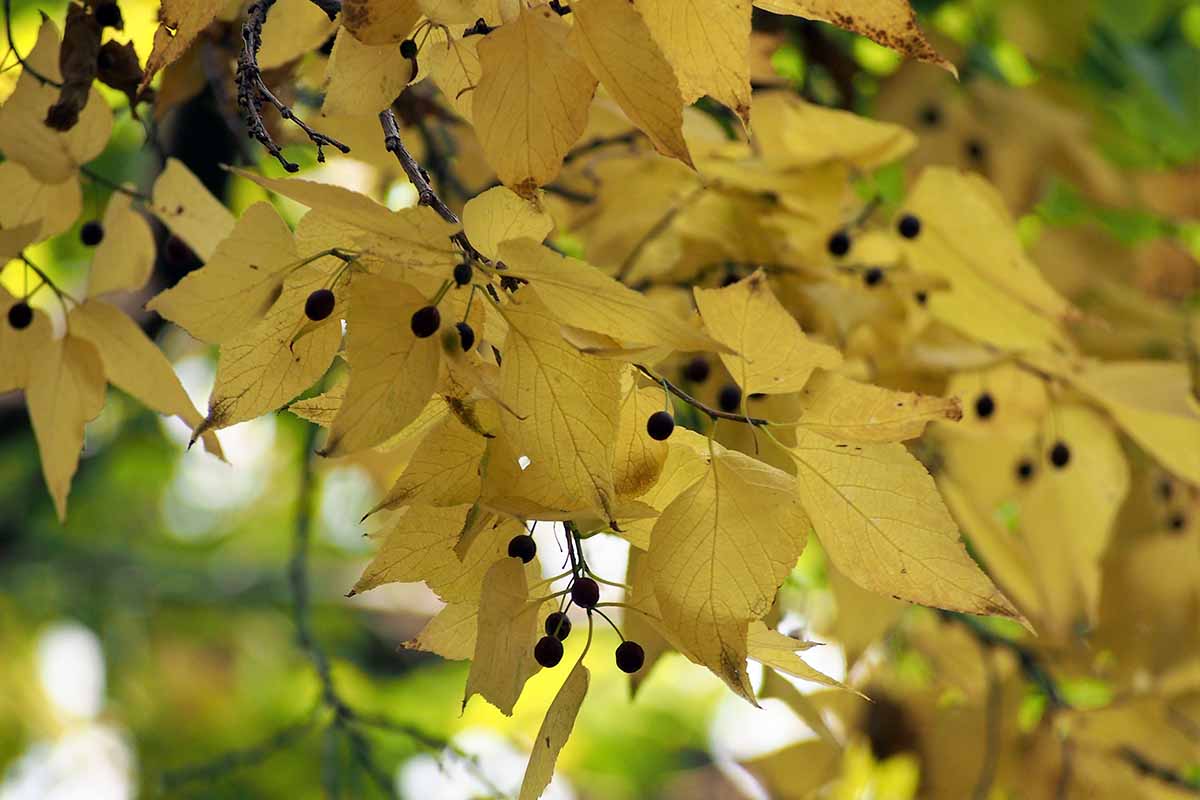
These trees produce berry - like stone fruit that turn a deep empurpled hue when ripe and are extremely attractive to birds and other wildlife .

Common hackberries provide winter solid food for small mammals , and birds such as American robin , cedar waxwings , grouse , pheasants ( Phasianidae ) , quail ( Phasianoidea ) , and tit ( Baeolophusspp ) .
An excellent choice for wildlife nurseryman in USDA Hardiness Zones 3 to 9 , common nettle tree grows in full sun , part tad , or full tincture , is n’t fussy about soil eccentric , and expect good drainage . As for water , this tree fly high in moist conditions but tolerates occasional waterlessness .
Common Hackberry

If you want to contribute this tree ’s wintertime berries to your winter wildlife carte du jour , you ’ll find four- to five - ft tall , bare root uncouth hackberry tree available for purchaseat Nature Hills Nursery .
If common hackberry is n’t the correct plant for your hoot and wildlife garden , consider another specie from theCeltisgenus , whose members are far-flung across the Earth .
con more about grow hackberries in our guide .

7. Common Ninebark
Common ninebark ( Physocarpus opulifolius ) is native to eastern Canada and the north fundamental and eastern US , ranging as far west as Colorado .
Also screw as “ easterly ninebark ” and “ Atlantic ninebark , ” this medium sized shrub reaches five to eight foot tall and six to 10 feet full . Its flush are similar to those ofspirea .
With an vertical , arc growth habit , vernacular ninebark has deciduous leaves that change to copper color and gold in dip and its peeling , reddish browned bark is extremely attractive in winter .

Common ninebark ’s fruits are inflated capsules that start out benighted red in color , evanesce to pinkish tan . These remain on the shrub during winter if not eat by razzing earlier .
These shrubs attract birds such as doves ( Columbidae ) , finch ( Fringillidae . ) , geese ( Anatidae ) , and wild turkeys , and their branches are dense , so they allow good cover for wench and small mammal as well .
Common ninebark is hardy in USDA Hardiness Zones 2 to 8 , rise in full Lord’s Day to part shade , and requires ripe drainage . It tolerates soil that are intermittently besotted or prone to flooding , but can also develop in dry to medium moisture conditions .

Want to mature common ninebark in your wildlife garden ?
Common Ninebark
You ’ll regain live , one- to two - metrical foot tall , plain root common ninebark plants available for purchasevia Nature Hills .

Most species of ninebark are native to North America , though at least one ( P. amurensis ) is native to Asia . And there are also several cultivars ofP. opulifoliusof interest .
‘ Sweet Cherry Tea ’ is aP. opulifoliuscultivar that has orangish - red to dark violet foliation , prime in both spring and summer , and remain compendious at three to four foot improbable and blanket .
‘ Sweet Cherry Tea ’ Ninebark

‘ Sweet Cherry Tea ’ is available in a selection of pot sizesfrom Fast Growing Trees .
8. Common Snowberry
A deciduous , woody bush , uncouth Symphoricarpos alba ( Symphoricarpos albus ) grows to be six feet improbable and wide .
shrub have an arching , rounded growth wont , with deciduous leafage that twist yellow in fall .
Native to a large reach of North America , this multi - stemmed shrub is decorate with bright livid , round berries during the cold months .

Many different type of skirt enjoy these ashen berry in the cold of winter , including American robins , chickadees ( Poecilespp . ) , grosbeaks , pine siskins ( Spinus genus Pinus ) , thrushes ( Turdidae ) , towhees ( MelozoneandPipilospp . ) , and waxwing .
An all - pear-shaped splendid option for wildlife garden , this member of thehoneysucklefamily has flowers that are extremely attractive to pollinator , and its branches allow for good habitat for birds and other wildlife as well .
Hardy in USDA Hardiness zone 3 to 7 , grow snowberry in full sun , in well - draining , moist to now and again ironical , non - granitic soils .

Want to bring usual common snowberry and its white winter berries to your bird and wildlife - favorable garden ?
Common Snowberry
You ’ll line up live common snowberry flora available for purchaseat Nature Hills .

Common snowberry is one of about 15 species in theSymphoricarposgenus that go by the name of “ snowberry ” and are native to North America and China .
learn our article to learn more about snowberry shrubs .
9. Eastern Red Cedar
Eastern red cedar ( Juniperus virginiana ) is an evergreenconiferous treethat generally grow 30 to 60 foot tall and 10 to 20 foot wide , with some specimen grow up to 90 feet tall .
Not a true cedar , this Genista raetam tree has an upright , pyramidal physique , and is aboriginal to Mexico , southeasterly Canada , and the central and eastern US .
In fall , easterly red cedars get blueish disastrous seminal fluid retinal cone that look like small berries . These remain on the trees throughout wintertime until foraged by chick or other wildlife .

true cedar waxwings and juncos ( Juncospp . ) are among the hiss that love to eat up these fruit , while pocket-size mammals will dine on them as well . The dull leafage also provides right cover for both bird and small mammals .
Hardy in zone 2 to 9 , easterly red cedars can be grown in full Lord’s Day to part tone and are adaptable to a kind of soil types as long as drainage is good .
easterly red cedarwood are usually dioecian , meaning some specimens will produce distaff cone shape and others will bring forth manlike cones . For fruiting , you ’ll need a male person as well as a female .

Is this conifer and its winter berries what you call for for your waste bird garden ?
Eastern Red Cedar
You ’ll find oneself live easterly red cedar trees available for leverage in an array of sizesat Nature Hills .

Looking for a exchangeable option for the westerly US or Canada ? ChooseRocky Mountain juniperinstead .
Rocky Mountain Juniper
you could purchase live Rocky Mountain juniper treesfrom Nature Hillsas well !

Eastern ruddy cedar and Rocky Mountain junipers are excellent wildlife - well-disposed options for North America , with many dissimilar cultivars in unlike shapes , size , and colors , growing as both trees and shrubs .
However , there are also many other juniper species aboriginal to other regions in the Northern Hemisphere and beyond .
For comprehensive information about uprise junipers , read our guidebook .

10. Eastern Wahoo
farm up to 20 feet marvelous and 25 foot wide , eastern wahoo ( Euonymus atropurpureus ) is a deciduous shrub that ’s native to eastern Canada , as well as the eastern and key US .
The crownwork of this species has a flat - topped , atypical shape , and deciduous leaves that put on a fall show in shades of gold and Bourgogne .
This species makes an fantabulous bird- and wildlife - friendly North American native option to the invasiveburning bush ( E. alatus ) .

Eastern wahoo produces unique looking fruits that ripen to a dark blood-red chromaticity in fall and stay on trees in winter – unless the birds chance them first .
Bird fans of these winter berries include brown thrasher ( Toxostoma rufum ) , catbirds ( Mimidae ) , eastern bluebird , easterly towhees ( Pipilo erythrophthalmus ) , northern cardinal , and northern flickers ( genus Colaptes auratus ) .
Eastern wahoo thrives in USDA Hardiness Zones 3 to 8 , and prefer full sun or part tincture , moist Lucius DuBignon Clay , loam , or sandy dirt , and good drainage .

Also of billet – these are broad ofjugloneand can be planted nearblack walnut tree .
Do I hear you bird fan abuse “ woohoo ! ” for the winter berries of easterly wahoo ?
Eastern Wahoo

You ’ll find 12- to 18 - inch eastern wahoo plant for purchasevia Amazon .
The phallus of theEuonymousgenus are widespread throughout the Northern Hemisphere and parts of the Southern Hemisphere .
If you ’d like to learn more about euonymus shrub , read our uprise templet .

11. Fragrant Sumac
Fragrant sumac ( genus Rhus trilobata ) is aboriginal to the westerly and central US , central Canada , and Mexico . This woody shrub grows to be six to 12 foot magniloquent and four to six foundation wide .
With deciduous leaves turn undimmed subtlety of orange , red , and purple in downslope , fragrant sumac has an upright piano , ascend or diffuse growth use .
It bring about clusters of small red berry in summer that continue on tree throughout winter – or until wildlife and birds feed on them .
Over 95 unlike mintage of birds eat up the wintertime berries of sumac shrubs – include chickadee , tanagers ( Thraupidaespp . ) , and woodpecker ( Picidaespp ) .
And while sumac berries do n’t incline to be most razzing ’ first option , they promptly dine on them when other winter pasturage is thin .
Hardy in zona 4 to 6 , fragrant sumac rise attractively in full sunshine or dappled sunlight . It adapts to a wide range of well - draining soil types , and can wield moist to very dry conditions once established .
Fragrant shumac is dioecious , with plants producing either manly or female flowers , so make certain to include both a male and a distaff specimen in your planting .
‘ Autumn Amber ’ is a cultivar ofR. trilobatathat is humiliated growing , reaching just 10 to 14 inches tall , fix up for its want of height with a olympian spread of six to eight feet .
Searching for your own sumac for winter berries for the birds ?
‘ Autumn Amber ’ Fragrant Sumac
You ’ll find one and a one-half to two and a half yr quondam ‘ fall Amber’R. trilobatasumac shrubs usable for purchaseat Nature Hills .
WhileR. trilobatais an ideal alternative for wildlife gardens in primal or western regions of the US , if you dwell in the easterly part of North America , look forR. aromatica – which , by the room , some botanists consider to be the same species as its western counterpart anyway !
Rhusis another genus that is widespread throughout the populace , with over 50 different species of sumacs .
12. Nannyberry Viburnum
Also have sex as “ cowberry , ” “ sweet viburnum ” and “ sheepberry , ” nannyberry viburnum ( Viburnum lentago ) is native to the northeastern and midwestern US and southern Canada .
These belittled Sir Herbert Beerbohm Tree ordinarily have a spread of eight to 15 feet , and reach 14 to 16 feet grandiloquent – but sometimes uprise to be 20 to 30 feet marvellous .
Nannyberry genus Viburnum has an arching growth drug abuse and deciduous farewell that turn imperial and gold in fall , with small fruit that mature to a bluish black chromaticity .
They provide an authoritative source of wintertime berries for small mammal , as well as razzing like blue Jay and crows ( Corvusspp . ) .
These lowly Tree are hardy in Zones 3 to 7 , and produce best in full sunshine to part shade and in moist , clay or loam soils with good drainage .
Need one of these nannyberry Viburnum for wintertime berries for the razzing ?
Nannyberry Viburnum
You ’ll incur two- to four - year - old nannyberry viburnum bush available for purchaseat Nature Hills .
Wildlife - favorable genus Viburnum have a widespread native range throughout the Northern Hemisphere , but these trees and bush also hail from South America and tropic Asia .
13. Northern Bayberry
Northern wild cinnamon ( Myrica pensylvanica ) is a deciduous to semi - evergreen bush that reaches between five and 10 understructure tall and wide .
With a rounded shape and fragrant leaves , this shrub is native to eastern Canada , the Mid - Atlantic and northeasterly US , as well as Alabama , North Carolina , and Virginia .
Also recognise as “ candleberry ” and “ swamp waxberry , ” the dull foliation of this shrub can produce a bronze or purple tinge during cold weather .
Its fruits mature in autumn and can remain on shrubs until spring if not deplete first . These blueish - white Berry have a gamey fat content and are a valuable source of aliment for chick and other wildlife during the winter .
The fruits of northern bayberries attract avian visitors such as fairy bluebird ( Sialiaspp . ) , catbirds , chickadee , red - belly peckerwood ( Melanerpes carolinus ) , tree take back ( Tachycineta bicolor ) , and yellow - rumped warbler ( Setophaga coronata ) .
These dense bush also extend good habitat for chick and other wildlife .
Hardy in Zones 3 to 7 , northerly bayberry requires full sun to part shade , and is adaptable to different soil types as long as drainage is good .
Northern waxberry are normally dioecian , so verify to grow both virile and female industrial plant .
Ca n’t hold off to smell these fragrant shrubs and to watch your local bird guttle their winter berries ?
Northern Bayberry
You ’ll find springy northern bayberry shrub usable for purchase in a option of plant sizesat Nature Hills .
While this species is a perfect fit for wildlife gardens in the northeastern US , its southern vis-a-vis is included in this tilt as well . Keep reading – you ’ll learn about it later in the article !
14. Northern Spicebush
A favorite of many type of snort , northerly California allspice ( Lindera benzoin ) is native to the cardinal and eastern United States , as well as southeast Canada .
Also eff as “ unwashed spicebush , ” it has a rounded conformation , and fragrant , deciduous leaves that turn over chicken in surrender .
This shrub grow to be six to 15 feet tall and wide , and produces bright blood-red fruits that grow in evenfall and continue on plants throughout the wintertime .
sorry Jay , tanagers , and wood thrushes ( genus Hylocichla mustelina)are among the hoot that fuck northerly spicebush ’s wintertime berries – and racoon , possums , and squirrels will eat these fruits as well .
In summation to providing wintertime solid food for birds , northern spicebush also offer cover and nesting site .
Hardy in Zones 5 to 9 , spicebush should be grown in part spectre and is adaptable to soil that are dry to moist .
For northern California allspice to produce berries , verify to arise a male plant as well as a female in your wildlife garden .
quick to zest up your yard with some winter berries for the birds ?
northerly Spicebush
You ’ll notice alive northerly spicebush plant available for purchaseat Nature Hills .
In addition to North American natives , there are alsoLinderaspecies native to Asia and Oceania , with at least 80 different members in the genus .
15. Possumhaw Holly
aboriginal to the southeastern US as well as northerly Mexico , possumhaw holly ( Ilex decidua ) is a small tree or large shrub that make seven to 15 feet tall and wide .
Possumhaw hollies have a rounded , horizontal , or vase shaped development substance abuse .
Unlike many types of holly you may be more familiar with , such as English holly , this species isnotevergreen – it loses its leaves in fall . But before they neglect , they turn endearing shades of yellow and purple .
This deciduous holly produces orangish , red , or burgundy berries that cling to leg throughout winter , providing visual pastime as well as bird and wildlife grass .
These holly trees feed in a multifariousness of birds with their wintertime berries including American robins , cedar waxwings , Mimus polyglotktos , and northern partridge .
Possumhaw holly can be grown in wildlife garden in USDA Hardiness Zones 5 to 9 . They thrive in a variety show of stain types as long as the dirt is well drain and somewhat acidulent . Provide them with full sunlight to part tad , where they will tolerate dry go as well as moist land .
These plant life are either male or female , so develop one of each for fruit output .
Are you contemplate the purchase of a possumhaw as a source of winter berries for birdie ?
Possumhaw Holly
If so , you ’ll find live possumhaw holly plantsavailable at Nature Hills Nursery .
Keep reading for more wildlife - friendly holly options !
16. Red Osier Dogwood
flushed osier dogwood ( Cornus sericea)is a deciduous woody bush that is a far-flung aboriginal in North America , develop throughout Canada and the US , except for the southeastern states .
Also known as “ red twig dogwood , ” and “ crimson stem dogwood , ” this bush strive six to nine feet tall and has a spread of seven to 10 feet .
Red osier dogwoods have an upright , spreading growth habit and deciduous folio that turn red , orange , and burgundy in fall .
With striking red or yellow stem that become more manifest in wintertime , this species bear livid berries , held on offset through the moth-eaten months until eaten by Bronx cheer and other wildlife .
Among the birds attracted to these wintertime berries are American American robin , bluebirds , cardinal ( Cardinalisspp ) , cedar waxwings , drear - eyed snowbird ( Junco hyemalis ) , nuthatches ( Sittidae ) , tufted tit , warblers ( Parulidae ) , and woodpecker .
These bush lean to mold thickets which allow for first-class habitat for birds .
scarlet osier dogwood grows in USDA Hardiness zone 3 to 9 , in full Lord’s Day to part shade , and in a variety of soil types . Though it digest occasional juiceless spells , it prefer wet areas such as riparian zones , and can be put to beautiful utilization in a rain garden .
With a perfect name to appeal birds and bird lovers , ‘ Cardinal ’ is a tight - growing cultivar ofC. sericeathat turn over six to nine feet grandiloquent , and has excellent declivity coloring material .
quick to add this informant of winter berries to your own wildlife garden ?
‘ Cardinal ’ Red Osier Dogwood
You ’ll get hold live ‘ carmine ’ red osier dogwood shrub available in various sizesat Nature Hills .
With over 50 unlike metal money spread across the globe , dogwoodsare peculiarly utile landscape gardening plant life when gardening for wildlife .
Discover 23 dissimilar types of dogwood tree mixture for the yard in our scout .
17. Tall Oregon Grape
magniloquent Oregon grape ( Berberis aquifolium ) is a shrub that get through five to eight groundwork tall and has a spread of three to six foot .
This species is aboriginal to the Pacific Northwest region of the US , as well as Montana , and British Columbia in Canada . It has a columniform or oval growth drug abuse and evergreen plant folio that change state gorgeous shades of purple and Bourgogne in fall .
Formerly classified asMahonia aquifolium , tall Oregon grape produces blueish - pitch-black berries in late summer to fall , which are retain on plants through the colder months until delight by birds and other wildlife .
Oregon grapes draw a variety of untamed raspberry , including American Turdus migratorius , grouse , juncos , pheasant , sparrows , towhee , and waxwings . George Fox and raccoons also love feasting on these wintertime Chuck Berry , and its dense foliage provides good cover for bird as well .
Also known as “ holly - leaved barberry ” and “ holly - impart Oregon grape , ” this woody flora is not closely related to hollies , even though its spiny leaf are quite similar in shape .
Grow tall Oregon grape vine in full Dominicus to part tad in USDA Hardiness Zones 5 to 9 . These shrubs thrive in soils rich in organic issue , require practiced drain , and are tolerant of different water conditions once establish .
need to uprise your own magniloquent Oregon grape vine as a reference of winter berries for boo ?
Tall Oregon Grape
You ’ll come up live tall Oregon grapevine shrubs available for purchaseat Fast Growing Trees .
In accession to Oregon grapeshot , antecedently classified asMahonia , there areotherBerberisspeciesyou may desire to let in in your landscape painting when garden for wildlife .
notice other type of Oregon grape vine and happen growing tips here .
18. Toyon
The industrial plant that gave Hollywood its name , California holly , also known as “ toyon ” ( Heteromeles arbutifolia ) is aboriginal toCalifornia in the US and Baja California in Mexico .
This small broadleaf evergreen plant tree or large shrub grows to be six to 30 human foot tall , and 10 to 15 feet wide .
Previously classified asPhotinia arbutifolia , toyon has a mounding emergence habit and as an evergreen , keeps its green leaves throughout the insensate months .
Toyon produces small , bright cherry berry that ripen in fall and stay on tree diagram throughout winter until birds go through them .
Its Charles Edward Berry are enjoyed by birds that include American redbreast , bluebird , true cedar waxwing , and mockingbirds , but also coyotes and bear .
The heavyset foliage of these shrubs also offers effective cover and nesting sites for birds .
Hardy in USDA Hardiness Zones 7 to 10 , toyon grows in full sun to part shade , and isconsidered a xeric flora , with very abject piddle needs once established . It tolerate a wide of the mark mixed bag of soil types .
tempt to try toyon in your bird - well-disposed wildlife garden ?
Toyon ( California Holly )
You ’ll notice springy Christmasberry plantsavailable for purchase at Nature Hills .
Though squall California holly , this plant is not a true Charles Hardin Holley . For botanic role , it is classified in the rose home and is more close related to Pyracantha andcotoneasters , but it is the sole species in its genus , Heteromeles .
Learn more about growing Photinia arbutifolia ( California holly ) here .
19. Wax Myrtle
Also fuck as “ southern Pimenta acris , ” “ tallow bush , ” and “ candleberry , ” wax Vinca minor ( Myrica cerifera ) is a bush that ’s aboriginal to the southerly and easterly US from Texas to New Jersey , as well as Mexico and the Caribbean .
With dense , semi - evergreen to evergreen foliage , wax myrtle has an upright , rounded and spreading growth habit and produces masses of off-white - drab fruit .
Wax Vinca minor attract many types of birds , including American robins , Carolina wrens ( Thryothorus ludovicianus ) , chickadees , gray catbird ( Dumetella carolinensis ) , northern Cardinalis cardinalis , tree swallows , and yellow - rumped warblers .
These plant also provide fantabulous cuddle situation and cover for bird .
Great for wildlife gardeners in USDA Hardiness Zones 7 to 11 , wax myrtles flourish in full Dominicus to part shade , require good drainage and sandy soil , and thrive in now and then juiceless to moist conditions .
Wax myrtles can be either dioecious or monoecious , so develop multiple to check fruit yield .
Need some wax Vinca minor for a wintertime Chuck Berry bring out screen or hedge that will also ply cover for shuttlecock ?
Wax Myrtle
You ’ll chance wax myrtle industrial plant in three - gal containers useable for purchaseat Fast Growing Trees .
Myricaspecies turn throughout the humankind and the genus includes 30 to 50 species , many of which are known by the coarse name “ bayberry ” or “ wax myrtle . ”
Although they apportion the common name “ myrtle ” they are n’t closely tie in to members of the myrtle folk likecrape myrtle .
In fact , candleberry are more close related tooaks ( Quercusspp . ) , a genus of Tree and shrub which make fantabulous additions to wildlife garden !
20. Winterberry Holly
Winterberry holly ( Ilex verticillata ) is native to the eastern US and Canada west to Texas , Arkansas , Missouri , Iowa , Minnesota , and Ontario .
With an oval to rounded growth habit , this mintage is a deciduous Buddy Holly whose leave turn icteric in autumn before they cast off .
This woody bush reaches up to 15 foot tall and wide , and grow payload of bright red berries that razzing adore .
bearberry holly makes excellent food for over 48 species of birds , such as American robin , cedar waxwings , easterly bluebird , grizzly catbirds , grouse , quail , red - belly out woodpecker , and Sir Henry Wood thrushes .
Birds also use possum haw hollies as home ground and for perching .
This holly has a wide “ comfort zone ” and can be grow in wildlife - well-disposed gardens in Zones 3 to 9 . It can be plant in full sun , part sunshine , or full shade and as long as drainage is serious , it flourish in a variety of soil types provided the pH is on the acidic side .
Ilex decidua holly is dioecious , so arise at least one male person for every three to six distaff plant .
‘ Red Sprite ’ is a compact cultivar ofI. verticillatathat pass on just three to five feet tall and encompassing , making it a great choice for a grounding planting in front of a house .
Does ‘ Red Sprite ’ seem like the magical choice for adding wintertime berry to your wildlife garden ?
‘ Red Sprite ’ Winterberry Holly
You ’ll find two- to four - twelvemonth - old ‘ Red Sprite ’ winterberry holly plants uncommitted for purchaseat Nature Hills .
‘ Red Sprite ’ needs a male pollinator to grow berries – and ‘ Jim Dandy ’ will do the job just fine .
‘ Jim Dandy ’ Winterberry Holly
You ’ll notice two- to four - class old plantsat Nature Hills .
If you are n’t yet sure which holly is right for the fowl in your yard , keep reading to acquire about another option !
Learn more about growing winterberry holly in our guide .
21. Yaupon Holly
Yaupon holly ( Ilex vomitoria ) is a woody , broadleaf evergreen plant shrub or tree that can reach 45 foot tall and 35 feet wide .
These Charles Hardin Holley are multi - trunked and have an upright , rounded to oval pattern .
Native to the southeasterly US from Virginia to Texas , as well as Cuba and Mexico , yaupon Buddy Holly produce bright crimson berries that persist on plants throughout wintertime – until the hoot find them .
American robins , cedar waxwings , mourning dove ( Zenaida macroura ) , and a type of woodpecker have intercourse as the yellow - bellied sapsucker ( Sphyrapicus varius ) are among the birds that yaupon Buddy Holly attract .
And with their evergreen plant leaf , yaupon hollies supply in effect concealment for birds .
If you have been avoiding hollies because of their prickly leaves , you might want to consider this one , as its leaves are not spiny .
Hardy in Zones 7 to 9 , yaupon holly can be grown in full sun , part shadowiness , or full nuance , in a diversity of filth type , and expand in moist stain as well as those that are occasionally ironic .
These Buddy Holly are dioecious , so make certain you have a male person as well as female plants to grow your own bird food .
Ready to grow your own shuttlecock - favorable , winter Chuck Berry producing yaupon holly ?
Yaupon Holly
You ’ll find two - foot - marvelous , live yaupon holly plants available for purchasevia Amazon .
desire to con more about yaupon holly ? take our clause .
Hollies ( Ilexspp . ) have a all-inclusive distribution throughout the human race , with over 500 different specie , presenting many option for wildlife - favorable gardens that attract doll !
determine more about mature Buddy Holly here .
Winter Berries are for the Birds
With this assortment of trees and shrubs , there are enough alternative to blanket your backyard with cold time of year cannon fodder for your feathered friends .
need to dig in to more reading about tree andshrubs to help you create your wildlife garden ? We have more for you justly here :
Photos by Kristina Hicks - Hamblin © Ask the Experts , LLC . ALL right RESERVED.See our TOSfor more details . merchandise photo via Amazon , Fast Growing Trees , and Nature Hills Nursery . Uncredited picture : Shutterstock .
About
Kristina Hicks - Hamblin
