Syringa reticulata
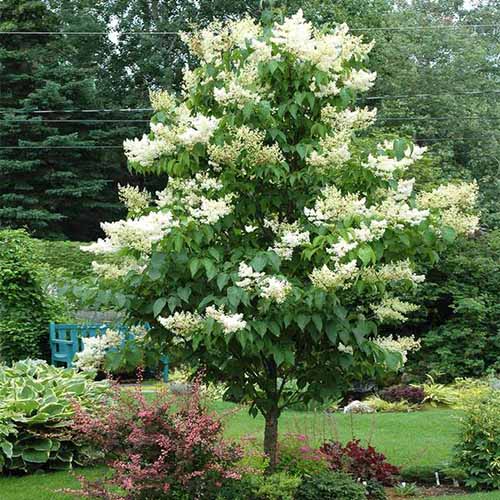
There ’s a theater on my street with a great Nipponese tree diagram lilac ( Syringa reticulata ) grow in the center of the yard .
It produces the most beautiful bunch of fragrant , pick - gloss flowers each spring , and it ’s a dream to arrest a puff of them when you walk by .
If you love lilacs and you need to add a lilactreeto your garden or else of – or in accession to – a shrub , this is the guide for you . This species will make a stunning , comparatively fuss - destitute addition to your railyard .

Photo by Dan Keck, Wikimedia Commons, viaCC BY-SA.
We link to vendors to help you witness relevant Cartesian product . If you corrupt from one of our links , we may realize a commission .
Tolearn more about growing lilacs , agree out our guide .
Are you ready to encounter out how to institute a Japanese lilac ? Let ’s get started !

Here ’s what I ’ll cover :
What You’ll Learn
What Is Japanese Tree Lilac?
As you credibly guessed from its common name , the Nipponese tree lilac is aboriginal to Japan , specifically the northerly part of the country , and gardener lead off cultivating this deciduous tree there as early as 1876 , according to the experts at Bernheim Arboretum and Research Forest in Clermont , Kentucky .
The full name for this tree isS. reticulatasubsp.reticulata . There are two extra subspecies that are concern to Nipponese lilac trees , but they acclaim from other geographic part and are a petite bit dissimilar .
TheS. reticulatasubspeciespekinensis , or the Chinese lilac tree , is native to China ; andS. reticulatasubsp.amurensis , also known as the Amur lilac , is native to Korea and eastern Russia .

The Japanese lilac is in the same genus as shrub lilac – Syringa , which come from the Greek “ pandean pipe , ” meaning pipe , and refers to the hollow plant stems found in someSyringaspecies . Reticulatais a variation of the Latin “ reticulatus , ” which mean net , and refers to the netted vein convention in the leaves .
Japanese tree lilac are part of the olive family , Oleaceae , along with other fragrant , flower plant likejasmine ( Jasminumspp.)and privet ( Ligustrumspp . ) .
Some gardeners even say the flowers ofS. reticulatasmell more like privet than unwashed lilac , S. vulgaris – a likely drawback , depending on your preference .

S. reticulatais become to zona 3 through 7 , hold it everlasting for northerly nurseryman .
It grows 15 to 30 feet tall and 15 to 20 feet wide , big than other lilac , and the canopy develop in a pleasing oval or round bod that is wider at the foot and narrower at the top .
The tree diagram blooms a little later than the common lilac , in June instead of May . The small flowers last up to two weeks and are borne on panicles that can be up to a foot long .

The leaves are round-eyed but beautiful , vivid William Green with an oval frame , and they turn gold or yellow in the fall .
After blooming , the flowers call on brown and , if they were cross-pollinate , get small , pod - comparable capsules containing two wing seeds .
The abridgment will stay on the tree even after the foliage shine off in wintertime . finally , wind and storms will scatter them throughout the surface area for the birds to enjoy .

S. reticulatabark is a beautiful brown - crimson color that matures to grey . Over time , the bark becomes more rough , developing gray scales .
If allow to grow by nature , as a large bush , it will have multiple trunks , though it can be pruned into a Sir Herbert Beerbohm Tree form with one chief trunk .
Japanese Tree Lilac Propagation
While you’re able to propagate lilacs from cutting , your success rate may be modest . But you may always give it a try , and it ’s the good manner to get an exact clone of the parent plant – unlike attempting to grow it from seed .
mature these plants from cum is a lengthy and metre - consuming process . In a study for the American Society for Horticultural Science , researchers foundthat the semen lose viability as they dry out , mean you ’d need to collect them unused off a tree diagram before they lose their natural moisture .
Dry seeds have a low germination rate , and they need soaking and two month of cold social stratification to spud . After that , plant propagated from germ can take four to five years to begin blooming . Most gardeners prefer to broadcast lilacs from cuttings or buy unseasoned plants rather .

When it comes to grow these tree diagram commercially , nursery typically practice graft or budding methods to diffuse raw tree . mere root plants that have not been graft onto other type of rootstock are also useable .
The easiest way to grow a Nipponese tree lilac is to buy a hot plant from a nursery or garden center .
If you still want to give home propagation a attempt , we ’ll hide rooting cutting below , and then explain how to transpose a new bare root works or potted tree into your chiliad .

From Cuttings
The dependable time to root lilac cuttings is in late springiness or early summer , when blooms are spent and growth has begin again .
Before you originate , sate four eight- to 10 - inch bay window with a motley of half sand and halfpotting stain . check that the pots have fair to middling drainage golf hole . H2O each so the medium is moist , and use your finger’s breadth to poke a two - column inch - abstruse cakehole in the centre of each one .
opt a leg that ’s comparatively new but nottooyoung : it should turn well and split up . If it does n’t deform at all , it ’s too previous ; if it bends but does n’t divulge , it ’s too green .

Using a sharp , clear yoke ofpruners , make a 45 - degree cutting on a untested outgrowth that ’s three to five inches long , and contains at least two to three nodes with leafage growing . For the good prospect at grow at least one cut to settle , take three more cut .
take away the leaves from the bottom two inches of each branch , making sure to leave at least two leaves at the top of each newspaper clipping .
Dip the cut remnant of each new arm in a rooting colloidal gel product like Olivia ’s Cloning Gel , a peculiar formula containing flora hormone indole-3 butyric acid derived from the white willow tree Sir Herbert Beerbohm Tree ( Salix alba ) .

Olivia ’s Cloning Gel
you may purchase Olivia ’s Cloning Gel in two- , four- , or eight - ounce bottlesfrom Arbico Organics .
set each press clipping in its pre - watered container , burying two inch of the theme . Cover with a humidity dome and place atop a heat mat for good effect ; you want the cuttings to stay ardent and moist .

you may also use a congius - sized moldable bag to cover each cutting , affixing it to the container with a rubber banding .
Make certain your cuttings receive a few hours of collateral sun from a windowpane , but not intense sun . keep them on a kitchen board set a few substructure away from a window is idealistic .
Keep the cuttings evenly moist , removing the humidity domes to water the rooting mixture every two or three daytime , or whenever the top of the territory start to feel ironical .

Roots should mould within four to six weeks . To check , mildly lug a cutting upward . If it resists your efforts , root have mold .
Remove the humidity attic and heat mat , and set the pot or pots in a sunny windowsill to encounter four to six hours of collateral sunshine a Clarence Day .
If you do n’t palpate any resistance , give the cuttings another two to three weeks to grow root before tossing them out .

When fresh leaves commence to grow , increase that time to six to eight hours of sun every Clarence Shepard Day Jr. , oruse a grow lightto accessory what the windowpane gives your industrial plant .
Fertilize your new plant , or plant , with a plant food for superman - love flora in the leap after the press cutting take root .
Dr. Earth Organic Acid Lovers Fertilizer

Dr. Earth ’s Organic Acid Lovers recipe is available in a one - Egyptian pound packagefrom the Home Depot .
This is a 3 - 4 - 3 NPK rule that operate well for lilacs . practice two tablespoons for each gallon of potting dirt .
For reference , an eight - column inch cycle smoke control about one Imperial gallon of potting mix , and a ten - inch pot holds three .

Water your fledgeling trees any fourth dimension the top in of soil dry out out . To check the filth moisture , poke your indicant fingerbreadth down about an inch into the potting mix .
With the right amount of water , sun , and forbearance , your new Japanese lilacs should grow faithfully indoors , all wintertime farsighted . When spring amount , you could begin to indurate the works off by come in them out of doors for increasing amount of time each mean solar day .
Once your lilac are accustomed to expend most of the day outside , it ’s transplanting time !

Transplanting
Whether you ’re transplant a young , potted tree diagram , a unembellished base plant , or a cutting off you propagate yourself , the process of transplanting is similar .
The near time to plant your tree diagram outdoors is somewhere between March and November , as long as the soil is workable .
nude root should be put in the priming in early spring or late fall , or whenever the tree in the surrounding orbit are dormant . It ’s beneficial to plant these promptly after you get them , if you ’re able to .

First , choose a site outdoors that receives six to eight hours of sun every Clarence Day . The area should have well - draining , organically rich , somewhat acidic ground . If you ’re not certain what type of soil you have , you canconduct a soil exam .
Next , dig a hole that ’s as cryptic and wide as the root lump you ’re make with .
If you ’re plant a bare beginning specimen , the hole should be as deep as the mass of rootage and about six inches panoptic .
Before you dig the hole for a simple tooth root plant , unwrap it from its promotion and soak the roots in water for at least half an hour , but not retentive than two hours . Bare origin plants postulate to stay on moist through planting time .
Work well - rotted compost or manure into the soil . You ’ll want to work two inches of compost or manure into the soil inside the entire circumference of the tree ’s dribble line to verify the radical system take the nutriment it needs as it load out beyond the initial planting hole .
To remove a potted works or tree from its container , apply a trowel or ahori hori knifeto loosen the root nut , pry it away from the edges of the mess . Grasp the base of the untried tree and tip the container to the side , gently tugging the plant out .

undo the theme testicle with your fingers and place the Japanese lilac inside the hole you compass for it . For a grafted tree , the scrape should be at least two inch above the soil .
For a bare source works , create a bump of grunge at the bottom of the cakehole and sports fan the roots out over it . In either case , verify to deflect covering any part of the main trunk or the stem .
Backfill with soil , tamping it down to remove air pockets , water your industrial plant thoroughly , and then maltreat back and enjoy the batch of your new Japanese lilac tree , all planted up in your railway yard !

If you are institute more than one , check that to allow enough space for mature dimensions .
You may bid to spray newly planted shrub with cervid , moose , and/or rabbit repellent . While mature specimen are resistant to mammalian munching , new works may suffer equipment casualty .
Liquid Fence Deer and Rabbit Repellent

Home Depot sells32 - ounce bottle of Liquid Fence , which helps to deter mammals from your tender young Tree .
If you know in a wordy country , you may need to stake your tree with a flexible cloth , such as nylon stockings , and a wooden post .
quash staking the Sir Herbert Beerbohm Tree more than two - thirds of the way up the trunk to allow it to move and originate stronger , and remove the wager after one year .

How to Grow Japanese Tree Lilacs
When it comes to growing condition , this gorgeous Sir Herbert Beerbohm Tree like well - drain , slightly acidic soil , but it can adapt to anything with a pH range between 5.0 and 7.5 .
It prefers evenly moist grime but tolerates drought , peculiarly if grown somewhere with mild summer conditions .
In the week after planting , give your tree a deep watering every two to four days , or whenever the top column inch of soil dries out .
After about six workweek , the plant should be well - established , and you may shorten watering to about once a week in the absence of rainwater , or whenever the top three inch of land wry out . To check the soil , horn in your index finger all the way down into the dirt .
When the soil freezes , you’re able to halt watering until the ground thaw again . Then , resume watering , but only once or twice a month until the foliage begin to emerge .
inseminate once a year with a balanced , 5 - 5 - 5 NPK fertiliser , or the Dr. Earth Organic Acid Lovers formula mention above , in early spring before bud begin to blossom .
For the Dr. Earth plant food , sprinkle two cups of fertilizer for every column inch of trunk diam over the entire drip line sphere , and carefully turn it into the top in or two of soil .
To help hold up in wet and suppress grass , spread a two- to three - inchlayer of mulchmade from organic fabric inside the drip line .
Growing Tips
Pruning and Maintenance
Nipponese lilac tree are fabulously low - upkeep plants , but they do apprize a yearly trim .
Make trusted you prune during a dry piece , when there ’s no rain in the forecast , as this can help to prevent bacterial blight . We ’ll dig out deeply into that in a second .
When you crop , be after to remove any broken , dead , or diseased branches from your tree every year , sooner in late wintertime just before participating growth resumes in the spring .
This is also an idealistic time to bump off any branches that are growing inward or rubbing against each other . rubbing between leg can result in lesion that allow pests and disease pathogens to penetrate your lilac .
you’re able to also remove branch that are n’t contributing to the overall shape of the plant .
Just be certain to use unclouded , astute pruning shear and cut at a 45 - level angle , making your cuts about a quarter - inch above a folio or bud guest . deflect pruning the plant life back by more than a third in a given year .
To observe a tree diagram form , off any lollipop that appear at the base of yourS. reticulata . This will help to prevent your plant from rise multiple trunks , and take on a more bush - like appearance .
After your pretty , cream - colored flower bloom and release brown , deadheadthem to promote the sizable growth of the tree .
Cultivars to Select
When it amount to this species , there are many options to choose from . Here are a few of my preferred Japanese tree lilac cultivars .
Each of them is suited to Zones 3 through 7 , and each produces fragrant flowers that attract a reach of pollinators .
Nipponese Lilac
If you ’re looking for the species assortment , you could purchase a three- to four - inch , multi - stem stripped root plantfrom Nature Hills Nursery .
Golden Eclipse
If you be intimate variegated leaves , ‘ Golden Eclipse ’ is the cultivar for you . This small tree , which grows just 20 groundwork tall with a spread of 15 feet at matureness , boast leave with deep unripened eye and gold - green bound .
The flower are a deeper pick colour than what you ’ll see in other cultivar , but they still bloom at the same metre , in late leap or early summertime .
‘ Golden Eclipse ’ is perhaps the least fussy of an already undemanding metal money !
Ivory Pillar
Do you desire an upright , minute Japanese lilac tree ( or two ) to set up your yard ? Ivory Pillar ™ ( aka ‘ Willamette ’ ) is your cultivar .
This tree make 20 feet tall but just 12 feet wide at due date , and grow in an upright , pyramidical shape . Its slightly more succinct soma make it idealistic for 1000 with limited place .
Ivory Pillar ™ flush just as prolifically as the ease of its metal money siblings . The efflorescence are creamy , but nearer to clean than those of ‘ Golden Eclipse . ’ And the leaves are a racy , average - black green .
you could buy Ivory Pillar ™ plantsfrom Nature Hills Nursery .
Ivory Silk
This popular cultivar grow 20 to 25 foot improbable and 15 to 20 feet broad , producing fragrant , pick - white flower in the late spring .
Selected in 1973 by growers at Sheridan Nursery in Ontario , Canada , this is one of the oldest and best - make out cultivar around .
‘ Ivory Silk ’
‘ Ivory Silk ’ has a rounded tip , giving it a pleasing , classic tree diagram shape , and it make an excellent add-on to a private road boundary line or blossom garden . The deep green foliage dead frame the heavy bloom .
you could buy alive plant that are five to six feet tallfrom FastGrowingTrees.com .
Snowdance
How endearing is the name “ snowdance ? ” It brings to mind clump of off - white , fluffy blossom trip the light fantastic toe in the wind , and that ’s on the nose what you get with First Editions ® Snowdance ™ ( aka ‘ Bailnce ’ ) .
This full , luscious tree grows 15 to 18 feet tall and 18 to 20 metrical unit wide , and it bloom hard in recent spring or other summer .
Snowdance ™ arise in a Hellenic , vase - like flesh and becomes a breathtakingly endearing tree diagram with potent lateral branches as it mature .
It ’s the eccentric of tree you ’d plant in your front K as a sensational piece de resistance for the neighborhood , or in the backyard so you may gaze out at it from your kitchen window .
With sour green foliage and atomic number 79 - imbue pick - colored peak , this show-stopper boasts improved pest and disease resistance – which is telling , since the species flora is already remark for these calibre .
industrial plant are available for purchasefrom Nature Hills Nursery .
Managing Pests and Disease
One of my favorite things aboutS. reticulatais how repellent it is to most pest and disease onset .
It ’s resistant to deer andmoose , for starters . And according to the experts at theUniversity of Minnesota Urban Forestry Outreach and Research Nursery and Lab , S. reticulatashows notable resistance to powdery mold , a trouble that chivvy the rough-cut lilac . It also resist borer andscale .
Nancy Pataky at theUniversity of Illinois Extensionagrees that diseases are few and far between for these plants , but one issue to watch out for is bacterial blight , do by the bacteriumPseudomonas syringaepv.syringae .
Bacterial blight is n’t terribly common inS. reticulata , but when it strikes , it can spread promptly , get stack of damage . The bacteria privilege wet weather condition and lean to set on raw shoots first .
septic parting develop dark-brown , water - dowse spot and take on a pinch appearing . Left untreated , infected stem can become girdled before dying off .
Pataky enunciate speedy treatment , including removing stirred shoots and spraying the entire Sir Herbert Beerbohm Tree with Cu fungicide , may help .
To avoid bacterial blight , ensure your pruners are cleaned and sanitise any time you trim the Sir Herbert Beerbohm Tree . Only trim or prune on juiceless days with no rainfall in the forecast – at least a full mean solar day beforeandafter your pruning date .
ascertain more information on disease that may affect lilacs here .
Best Uses for Japanese Tree Lilacs
If you ’re growing a fruit orchard , why not add a Japanese lilac tree to the intermixture ? This tree diagram pairs well with other scented , blooming specimen , and helps to attract pollinators to your plantation .
Or , create a border along the circumference of your yard to add some privateness in the summer .
you’re able to also do what my neighbor did and simply plant a Nipponese lilac in the centre of your yard as a show - stopping plant that also provide shade and a perfect place to snap .
And of row , remember to cut a few panicles of flowers and bring them indoors to liven up your home with your own delicious Japanese lilac blooms !
Quick Reference Growing Guide
Stop and Smell the Lilacs
If you cultivate one of these lovely plants at home , you wo n’t be able to aid going out under your tree each June , and blank out your to - do list entirely so you’re able to relish the fragrant clusters of flower .
And why block off yourself ? You ’ll have garner it .
Before you go , contain out these additional article onlilacsnext :
© Ask the Experts , LLC . ALL RIGHTS RESERVED.See our TOSfor more details . Originally published December 22nd , 2021 . Last updated March 31st , 2023 . intersection photos via Arbico Organics , FastGrowingTrees.com , Home Depot , and Nature Hills Nursery . Uncredited pic : Shutterstock . With additional writing and editing by Clare Groom and Allison Sidhu .
About
Laura Ojeda Melchor
