Cercis canadensisvar.texensis‘Oklahoma’
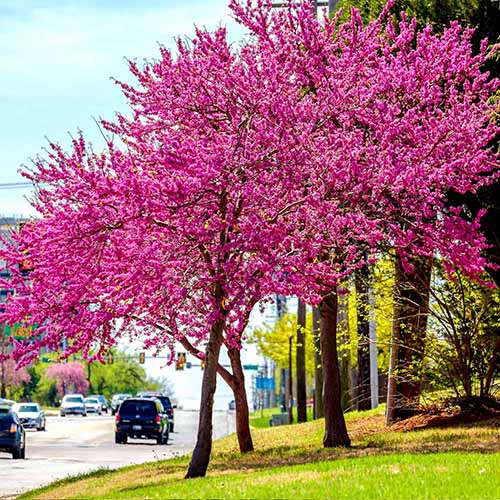
There is a whole lot to love about redbuds . Who has n’t been mesmerized by a tree crown with a cloak of vivacious ruby-red - pink flowers ? It ’s a stunning sight .
Even after the flowers fade , the glossy , heart - shaped leaves are an attractive increase to any garden . Plus , these trees are drought tolerant enough that they ’ll even work in xeriscaping .
We link to vendors to facilitate you find relevant products . If you buy from one of our links , we may garner a commission .

Photo credit: JC Raulston Arboretum at NC State University.
Now , take all that salutary material and make it just a short flake adept . thick coloring , glossier leaves , more drought tolerance , and even more peak , all in a lowly package . Say “ hello ” to ‘ Oklahoma . ’
While the easterly Cercis canadensis is officially the state tree of Oklahoma , unofficially , it ’s the lovely ‘ Oklahoma ’ cultivar that people think of as holding that distinction . you could hardly charge them . I ’d want to take the most tremendous selection , too .
This guide will excuse the difference between ‘ Oklahoma ’ and the mintage , and how to make this particular cultivar flourish in your garden . Here ’s what we ’re going to discuss :

What You’ll Learn
With all the excellent redbuds to prefer from , what create ‘ Oklahoma ’ so wonderful ? permit ’s talk about it .
Cultivation and History
‘ Oklahoma ’ is a Cercis canadensis treefrom theCercisgenus . ‘ Oklahoma ’ is often mislabeled as aC. reniformis , but it ’s formally a cultivar of the easterly redbud ( C. canadensis ) , specifically thetexensisvariety .
In botanic terminus , “ variety ” entail it ’s a born variation of the metal money rather than one that was cultivated by man .
For a little background , there are three variety of thecanadensisspecies . The most common is var.canadensis , which grow all along the Atlantic coast from New Jersey to Texas .

The second ismexicana , which grow in west Texas to northeastern Mexico . Texensisoccupies the expanse of Oklahoma , central Texas , and northeast Mexico .
Texensisis much more tolerant of heating and drought than itscanadensisvariety cousin , but it ’s pretty exchangeable tomexicana .
In fact , some phytologist think the two are only environmentally - induce morphologies , with the more leathery leaves ofmexicanaappearing in sphere where the landscape painting is more desiccate .

‘ Oklahoma ’ was come across grow in the wilderness in the Arbuckle Mountain range in Oklahoma in 1964 . It was train , named , and put on the market by Warren & Son Nursery in Oklahoma City in 1965 .
The foliage is deeper green and shinier than that of the species , and the blossom have a deep imperial - red hue . It ’s one of the earliest blooming eastern redbuds and grows to about half the altitude and a third of the breadth of the specie .
It reaches about 18 groundwork marvelous and 20 feet all-embracing , with a dense , rounded crown . Some have been known to grow up to 25 feet , but it ’s not common .

Propagation
‘ Oklahoma ’ is a pretty tremendous redbud , but it does have one failing .
For whatever reason , the tree just does n’t lend itself to propagation via cuttings , layering , or grafting . All of these method generally fail .
startle seeded player is a slay - and - miss proposal , but it ’s certainly more reliable than vegetative propagation .

propagate seed necessitate nab some from the pod on a matured Sir Herbert Beerbohm Tree in the fall and then putting them through several months of social stratification before implant .
The other option is to transplant purchased saplings or mere root .
Whichever method you prefer , we have a more full explanation of each processin our redbud multiplication scout .

Be cognizant that all redbuds begrudge being transplant , so pick your smear carefully and do n’t move it once you ’ve put it in the land .
These plant have long taproots that maturate deep into the grease in just a few years . Once the taproot becomes established , it will send out secondary etymon that can be almost nine inches long .
How to Grow
‘ Oklahoma ’ needs well - draining soil , so do n’t plant anywhere that has flaxen or cadaver soil unless you improve it well withlots of well - waste compost .
Heavy clay will cause the taproot to rise horizontally , and the tree diagram will ache .
implant the trees in full sunshine or partial sun . Younger trees can handle fond ghost , but as the trees mature , they require more sunlight .
Some people plant their redbuds in heavier shade than is idealistic , and the youngster does fine for the first few eld . Then , as it age , it starts to look sad , tenuous , leggy , and sparse . Eventually , it will belike develop spunk rot .
‘ Oklahoma ’ is middling adaptable , more so than many other redbuds , but do n’t attempt to test it too much . Give it full sun if you’re able to .
While the deep violet - red heyday are every chip as beautiful as those of any Cercis canadensis , this eccentric stands out even more because it tends to have more of them than the mintage .
It also has exceptionally glistening leaves . It almost looks like someone has pack article of furniture refinement and wiped all the thick , heart - mold leaves with it . These come forth after the flowers assailable .
You need to fecundate to upgrade these blooms and leaf , but the procedure is n’t a challenge . Once a month during the growing time of year , feed your tree diagram with a balmy , balanced plant food .
Something balanced with an NPK of 10 - 10 - 10 is just right , or you’re able to apply something close to that .
For example , Pendleton Turf Triple is a reliable alternative that can be used for all variety of plants . It ’s made from seaweed selection with healthy amino Zen .
Pendleton Turf Triple Fertilizer
Pick up a 32 - troy ounce containerat Amazon .
Along with solid food , the right amount of water is of import .
This tree can digest more drouth than the species , but too much drouth and the Sir Herbert Beerbohm Tree wo n’t perform as well as it can . When the top three or four inches of soil dry out out , it ’s metre to irrigate .
water supply cryptic and long to bring home the bacon for that long taproot , and to encourage it to grow down rather than horizontally in hunting of shallow water supply .
Growing Tips
Pruning and Maintenance
‘ Oklahoma ’ youngsters lean to be a spot gangly . We all had our awkward phases , right ?
Remove any low - grow offset or contend trunks and prune them to give them a shape that appeals to you .
You might also want to give the tree some training when it ’s very young . Tie it to a nearby post to encourage just development .
All redbuds are cauliflorous , which means they bear their flowers on trunks or stems . This is an adaptation that makes it easy for pollinator to get at the flowers .
Redbud flowers develop on old woodwind rather than unexampled growth , which makes pruning all that much easier .
With flowers that mature on new growth , if you prune at the unseasonable time , you ruin that year ’s display . But you in all probability wo n’t mess up the flowered presentation on redbuds with inappropriate pruning .
It is easiest on the tree if you rationalize when it ’s dormant in the late winter .
At that time , bump off any diseased , dead , discredited , or deformed branches . Any branches that are traverse or scratch should be removed as well .
Now , take a flavour at the shape of the tree . Are there any branch that deflower the shape ? Get them out of there . Or , does the nerve center look too dull ? melt off it out .
Any leg you contract should be move out as close to the nearest branch or trunk as potential .
Where to Buy
‘ Oklahoma ’ is a popular option , and you could probably find one at a local glasshouse in your sphere , or you could snap up onefrom Fast Growing Trees .
Oklahoma Redbud
They carry four- to five- or five- to six - base - improbable live trees with a one - twelvemonth warranty .
Managing Pests and Disease
Any pests and diseases that will assault a species Cercis canadensis will assail ‘ Oklahoma . ’
Deerandrabbitsare going to be your two biggest challenge , but folio rollers ( sept Tortricidae ) , emerald ash tree borer ( Agrilus planipennis ) , canker , and verticillium wilt disease are all trouble you may encounter .
Ourguide to growing redbudscan walk you through how to identify and make out with these problem .
Best Uses
Because of its size , this tree is perfect as a specimen in the garden .
Let it play as a centerpiece for some other bloomer that can add a small extra colouration to the area , such asbluebells ( Hyacinthoidesspp.),phlox ( Phloxspp.),violets ( Violaspp . ) , and wood lilies ( Lilium philadelphicum ) .
Quick Reference Growing Guide
‘Oklahoma’ Trees Have Plenty of Heart
Redbud tree have such eye - catch up with , vibrant blossoms , and they ’ve earned a place in many , many gardens across the nation . But ‘ Oklahoma ’ has all the practiced material and pack it just one step above .
With glossier foliage , more profoundly coloured flowers and more of them , and high drought tolerance than the mintage , it ’s all the proficient of redbuds but just a little turn well .
What appeal to you the most about ‘ Oklahoma ’ ? How will you be using it in your garden ? Share all the detail with us in the gossip plane section below .
Hopefully , this guide gave you the confidence to make your ‘ Oklahoma ’ Cercis canadensis thrive .
You might also be thinking aboutgiving your landscape painting tree some friends . If so , you may find these guides useful :
© demand the Experts , LLC . ALL RIGHTS RESERVED.See our TOSfor more detail . Product exposure via FastGrowingTrees.com and Pendleton . Uncredited picture : Shutterstock .
About
Kristine Lofgren
